Showing posts with label Educational Technology. Show all posts

Tuesday, June 17, 2025

AI Supports Esports in Education

As an avid tech nerd, gaming enthusiast, and digital native, I have always been one to test new technologies, push the boundaries, and make sure students can see the uses of technology in their everyday lives. I used ChatGPT when it was first showcased, and had it create a list of reasons why scholastic esports were important to use in school. Gaming, computer science, and AI all blend nicely together in the world of education. Then, a few years later, I found that same prompt and prompted ChatGPT to update my prior request. It gave me two different options this time, and in much more of my own voice. Below are the two different prompts. Let me know in my social media polls which one works best!

Image of the Author as an action figure, holding steam deck with additional esports tools, titled Esports Educator. Made with Chat GPT's image creation tools. a

Response 1: 

Why Esports Belongs in High Schools: An Instructional and Engagement Powerhouse

After nearly two decades in education—spanning classroom teaching, instructional leadership, and higher education support—I’ve seen firsthand the transformative power of student engagement. One of the most impactful and often overlooked tools to reach today’s learners is esports. Whether students are competing at a high level or casually connecting in a club environment, esports offers high schools a dynamic platform for instruction, inclusion, and innovation.

A New Pathway for Engagement

Not every student connects with traditional extracurriculars. Esports offers a new, highly relevant option—one that speaks their language. As someone who’s built both a computer science pathway and a scholastic esports program from the ground up, I’ve seen students who struggled to find their place suddenly light up when handed a controller or asked to lead a strategy session.

Esports clubs provide an entry point that feels familiar and exciting. Students engage not only in gaming but also in teamwork, leadership, and communication. I’ve coached students who started off shy or academically disengaged and watched them grow into confident leaders, shoutcasters, analysts, and even aspiring coders.

Inclusive by Design

Unlike traditional sports, esports is inherently inclusive. It doesn’t discriminate by physical ability, gender identity, or socioeconomic background. I’ve seen students who might otherwise be sidelined become integral members of a thriving community. In our club spaces, students with IEPs, English language learners, and those from diverse backgrounds came together over shared goals and mutual respect.

Casual players are just as important as competitive ones. Whether they're helping moderate a Discord server, creating team logos, managing social media, or simply enjoying the community, there’s a role for every student.

Real-World Skills in Action

In my time as a NASEF Fellow, Mentor, and now Community Leader, I’ve helped other educators tap into the full educational potential of esports. When structured intentionally, these programs teach far more than gameplay. Students learn:

  • Communication and Collaboration – Every match is a team effort. Students learn to give and receive feedback, resolve conflicts, and adapt strategies in real time.

  • Digital Literacy and Tech Fluency – From streaming and shoutcasting to hardware troubleshooting and software configuration, esports cultivates essential 21st-century skills.

  • Critical Thinking and Decision-Making – Strategy, adaptability, and analysis are core to gameplay—and all transferable to STEM fields and beyond.

And let’s be clear: esports isn’t “just gaming.” It’s broadcasting. It’s event planning. It’s graphic design. It’s business. It’s coding. In my time as Director of Secondary Services at Harrisburg University, I worked to align dual enrollment and workforce development programs with the kinds of real-world skills esports fosters. The career connections are already there—we just need to build the bridges.

A Culture of Belonging and Well-being

There’s also a social-emotional side to this work. Esports clubs give students a safe, welcoming space to be themselves. They form friendships, build community, and find a sense of purpose. During some of the most isolating moments of the pandemic, our esports program became a lifeline—students kept showing up not just for the games, but for each other.

Looking Forward

High schools should embrace esports not as an afterthought, but as a cornerstone of modern student engagement. When structured thoughtfully, these programs blend learning, community, and fun in ways that are hard to replicate elsewhere.

Whether you’re running a varsity program or just starting a casual club, esports is more than just an extracurricular—it's a future-ready, student-centered instructional tool. And it works.

Friday, June 21, 2024

What Teaching Needs Now!

When I proudly declared I wanted to go into education, after my senior year of high school, I thought I was doing it for all of the right reasons. I wanted to give back to society, and the impact that education had on me growing up, the goal was to educate the youth and help them find their path. Then after 14.5 years in the classroom, I transitioned into higher education and an administrative role. My impact on education has grown tenfold what I had as a classroom teacher, and I always want to support the efforts of those in the classroom. The Secondary Schools Team at Harrisburg University of Science and Technology is a dynamic group of exemplary professionals who are continually supporting high school teachers and students in the very thing I wanted to do as a teacher, help students develop a path.

Teachers need to pivot, in an age where information is readily available at your fingertips, and people can find massive amounts of information at any given time. We need fewer standardized tests for rote memorization, we need more time to collaborate and build engaging authentic lessons with our peers, and we also need time to reach students where they are. ChatGPT has shown that AI can help us use algorithms to find and write in detail. AI can be used to spark creativity and learning how to navigate new platforms is especially important for all learners. The moral implications should also be explained, in that the individual's creative rights are important, and so too is the advancement of knowledge use.

Made with AI Comic Factory

Gone are the days of needing to know absolutely everything by memory. Now we need confidence in finding the correct processes. So, to fix say an outlet you should be able to find DIY information, with skilled professionals who are not going to cut corners, but make you able to fix something simple up to the correct code. AR glasses can be used by technicians to facilitate fixing machines and wiring within a manufacturing plant. (See Vuzix: Field Service Glasses)

A Man Playing a Video Game using Game Controllers
Photo by Pavel Danilyuk from Pexels: Link Here

Education needs to adapt and become the problem-solving, critical-thinking, confidence-building vehicle behind all modern industry changes. Multiple-choice, standardized tests, are a thing of the past. Absorbing and analyzing information in a digestible format makes learning so much easier. During a webinar I attended in 2017, a presenter stated that human beings are visual learners. Hence, learning from videos or images broken down into steps helps us learn more quickly. Reading and interpreting a text is a learned behavior, and although some are successful that way, not all learners can learn processes through reading alone. Another book I just read, Make it Stick: The Science of Successful Learning, gave multiple case studies on how learners who had multiple points to recall information in short assessments or self-questioning, learned material better. Teachers need to practice new quick learning and recall skills with students and get rid of re-reading until they understand practices. Practical use of knowledge is how recall becomes long-term and useful. 

One tool that resonates with me personally is the use of scholastic esports. Gaming to learn, gamification, game design, competitive gaming matches, and setting up intermural and external esports tournaments are all great pathways where games can be used to leverage learning. Students can think critically, use problem-solving skills, collaborate, and build leadership skills all in scholastic esports programs. Students don't have to be great gamers either to get into the space, there are support roles that are highly needed, and when developed can be used in a multitude of careers in the future, including social media and marketing. Education needs to embrace gaming and tools like it for teaching students. Scholastic uses of games can help connect to students who might have a harder time connecting with their learning. 

Gaming Setup For Competitive Esports
Photo by Yan Krukau from Pexels: Link Here

Tuesday, June 15, 2021

Finding Inspiration in the Gaming Industry

Reasoning

Ever wonder what's out there in the gaming industry? What about esports? Where are the people who look like you? How many women or BIPOC or LGBTQ+ people are represented in the industry? If you look you may see, much like other white-collar professions in the U.S., the industry of video games is dominated by white men, but they aren't the only ones playing games! Demographics for gamers are much more diverse than the professionals who are making the games. So where do we look for diverse student inspiration?


In the book, The Esports Education Playbook: Empowering Every Learner Through Inclusive Gaming, Bradford Harris, a NASEF Fellow, is quoted as saying, "I am really big on making sure I expose as many Black and brown children to esports as possible because it's not being seen. That's the reason I jumped into it (esports in education). So every time I go somewhere, I start asking those hard questions." 

The demographics of the esports and gaming realm are not what I see on a day-to-day basis as an educator. I see many BIPOC students and want them to see themselves in a growing future with technology. So I had to go searching and find inspiration, representation, and career options for the gaming industry.

How can this help others?

Educators have to dig, sift, and vet content with BIPOC, female and LGBTQ+ representation. Here is what I have used as career exploration tools, that help showcase their students represented in the medium. Many of the videos I found were accompanied by a Google Form or a Google Doc as a journal, to reflect on the learning and opportunities in the gaming industry. 

With 53% of my high school population in the Latinx demographics, I really wanted to help my students learn about the industry and where they can find room for themselves. Use the following links to help showcase panels and people in the Latinx community working in games:

Latinx in Gaming GDC 2018

Learn more about the panels’ work!
Edgar Serrano: Lienzo Studios
Daniel Monastero: Garage 227 Studios
Andro Miralrio: Keywords Studios
Gracie Arena Strittmatter: EA Gracie Intro

In the Know: Latinas in Gaming

Our African American population is 35% and they deserve to see themselves represented as well. Find BIPOC representation with these links:

1st Black Owner of Game Development Company

Gaming for Everyone: Blacks in Gaming GDC Feature

Other demographics are important too! Asian representation in gaming links:

NASEF: Careers in Esports - Team Manager, Andrew Kim

Where are the women? The number of girls in any program is much lower than some demographics, and they deserve a spot at the PC. Not just as support either! Women in gaming links: (Also look at the Latinx community!)

Esports Explore - Esports Journalist Women in Gaming

Gaming can make a better world | Jane McGonigal

Studying Esports in the UK

Some great interviews for more learning. We need to inspire, and share stories and successes of those who came before: 

Esports Explore - Content Creators

Esports Explore - Game Designer


BIPOC Entrepreneurs   

While driving, I listened to some podcasts and found The Toys & Tech of the Trade Episode 35, which highlighted an interview with Sebastian "Chosen1" Burton. The interview led to an interesting conversation with Sebastian about his work in esports since the age of 19. I was enthralled by his story and reached out to him after looking up his esports company, Gold Standard Gaming. Through a lot of conversations with my principal, I finally got Sebastian to Zoom into our school and speak to students in the Cybercats and my Exploration of Game Design courses. Finding BIPOC Entrepreneurs was a dream come true, and having students chat with Sebastian was an amazing experience. Mr. Burton spoke about his experiences in the industry, gave some life lessons in perseverance, and then discussed actionable steps students could take today to leverage their social media and graphic design skills to help launch a career in anything!


Final Thoughts

Finding inspiration and diversity in the gaming field can be daunting, and searching through hours of footage is a must if you want your students to feel represented. I know I am lacking in some demographics, as I only have one video showcasing a member of the LGBTQ+ community, and I welcome any advice in the comments. My students, our students, deserve to see themselves in the game industry!

Friday, November 27, 2020

Sine Wave Start to my 2020-2021 SY

This school year has really been like no other! I have had so many highs and lows starting off in a virtual setting. I've gone from overwhelming pressure to everything that is working! I've made mistakes and found valuable resources. There are times that I have had to show more humility and grace towards my students, and allow myself to have more humility and grace for my own mix-ups. 

It's embarrassing to admit, 

1. I sent the Zoom Link for my 5th Period to my 4th Period, and was getting upset my AP-level students weren't showing up! Luckily a student e-mailed me and I saw the notification on my phone, and popped in the Zoom with them!

2. I sent an assignment to my 1st-period class twice! Because I auto-assigned it to both my 8th Period & 1st, the same course on another day! 

3. I used the headings from my AP CS-A course for my AP CSP Assignments. 

4. In my College Calculus class I have forgotten multiple times to add a Submission option for my Canvas Assignments!

5. I cannot remember names like I used to and I am more forgetful in the online conversations that I have had with students!

6. I cannot motivative my best students to even show up for the fun events! Students are not showing up to online tournaments and events that I have helped set-up. I was even ghosted by a student from the club, he has not messaged or logged into the club page in weeks. 


I do not understand this year, I have had frustration after frustration, been turned down on several opportunities and grants. Through it all, I am making sure I build brand new virtual courseware for students and when we have successes, I am trying to make sure I celebrate them!

From the challenges, I have also had successes:

1. Building my Exploration of Game Design Course, of course, is the top success of this new school year.

2. Becoming a NASEF Fellow, and having my draft for an Esports Book Chapter accepted! (I am going to become a published author!)

3. Building up our Cybercat Video Game and Esports Club, one student at a time!

4. Having students featured on the NASEF Rube Goldberg Minecraft Challenge. 


5. Using Among Us to bring our Game Club together, and just have fun in my Exploration of Game Design Course, while teaching about Persuasive Arguments. (Thank you to one of my NASEF Mentor’s Angelique Gianis!)

6. Being interviewed by the Literacy Advocate on his Podcast! (Take a listen here:  https://anchor.fm/timmy-bauer)

Students in my Pre-Calculus Section Completed the 
Khan Academy Learner Storm. 12 Trophies
were collected in 10 Weeks!

This school year is far from perfect, and it’s way more stressful than I have ever been in my life. Trying to balance this virtual work life with a home life has been difficult. I have had to set boundaries and not answer emails or Remind Messages or texts from parents late at night. I also realize that this is nothing I was ever trained to work in, nor thought would be possible in my lifetime. But a wise Tik Tok Teacher explained that we cannot beat ourselves up because at this moment and during this stressful time, we may feel ineffectual and feel like terrible teachers. But we have yet to see the full data, or any of the anecdotal evidence this is 100% true. Watch the TikTok Here!

It has been a wild, sine function wave of a ride, but I am doing exactly what I should be doing. We are challenged daily, learning from those embarrassing moments, and successes are happening that should still be celebrated!


Wednesday, June 24, 2020

Flattening the Curve: Teaching During the COVID-19 Pandemic

Ten weeks, that is how long online remote teaching lasted and the ups and downs of social distancing were a constant pull on my emotions. I never thought in a million years that I would live through and work during a global pandemic.

March 13th, 2020 we received an all staff e-mail, that stated the Governor had closed all schools until March 30th. We all walked out of our building unsure of our next steps, when we would ever see our students again and with no clue how we would teach our students. The college I adjunct at also had decided after the Spring Break, to go online with all courses as well. Between TikTok, Tiger King,  Video Games, Cleaning, and Legos, at first helped me keep my sanity.

March 25th, two weeks later we were informed we would start online distance learning with our students.

The process to start online remote-learning during the social distancing lock down was not easy.  It was bumpy, filled with frustration at a slow approach to disseminate information. The district was deliberate in only giving information when they finalized it and gained our state's backing for the plans. Then after two weeks of the administration planning, it was our turn. We were given training on how to use our school's selected means of educating students. Then we were asked to create modules for our common courses and share them with staff who teach the same courses. Students began logging in a week later, and we were on week four of lock down when all students were instructed to login. Our district worked with teachers and the Local Intermediate Unit (a state-affiliated education specialist facility in PA) to use Odyesseyware and run courses for our senior students.

I was allowed into my classroom March 28th to pick-up any supplies I needed to help with online teaching. It was very surreal walking in and only having a few moments to gather the things I thought I would need.


@a4jsk Missing my students!! ##gibsongeometry ##teachersbelike ##teachersoftiktok ##fyp ##foryoupage
♬ Robin Williams Edit - twelveshade

The following week we would start to go live in our online platform for students. I made sure all students were enrolled in one of my Google Classroom Courses. A great positive, all but 2 students responded to my course enrollment requests! I then used my Google Classroom Streams as a way to push out announcements, I sent memes to help add a little humor to the days. 

April 1st students saw an important link that said, "Urgent Update" which led to this YouTube Video: News Alert - Breaking News, yes I Rick Rolled my classes.

At home when classes started, my wife, a 1st-grade teacher in a neighboring district, was already working on online instruction and with her students. My daughter, a 1st-grade student, was also working with her teacher daily online. I was left with the toddler, to keep her entertained and out of the way while my wife taught her students and guided our daughter in the asynchronous work she was assigned. This was very difficult at times when I had morning faculty and PLC Zoom meetings myself. We made it work while working from home we navigated our way through teaching students.
My Best Covid-19 Looks & Memes!

The rest of the days became a blur. One morning I found dirt tossed into my coffee, the start of a really bad day. There were terrible meetings, information that was ineffective, and the thought of not seeing students ever again. Then another day a squirrel busted in through the unused chimney flue that is in a room we have dubbed the "Sun Room". Causing a full ruckus to our morning routine, he came back a few weeks later as well, disrupting the new normal. 

All students did not work, and the AP Classes that I teach had all of the seniors removed to the LIU course, and then halfway through the Marking Period given back to me to hurriedly prepare for an exam that they had missed too much content for. All of my AP Computer Science A students took their exams with no problems, but my AP Computer Science Principles only had 9 of the 24 students prepare all of their AP CSP Performance Task Projects. This was a major let down, and one that had me questioning how to feel. Do I go with the school's mantra of "Grace over Grades" or make sure to uphold the expectations and rigor of an AP course. I felt very torn over this issue... It did not help that the students were not added into my own AP Course until part way through the marking period. 

Teaching in a college course online was not as difficult. I only had issues with attendance while trying to have open Zoom Meetings for my 5 freshmen and 1 Junior. Usually it was just me and my Junior, chatting about the weeks events and then leaving to check out the newly arriving finished assignments. Our Distributed Leadership Team began meeting virtually and had several meetings with themes to lighten the mood as well!
DL Zoom Hat Day
DL Zoom Hat Day
DL Zoom Dress to Impress


While there was a feeling of having so many drawbacks, there were also many great moments as well! My wife while working with her students was able to reach and help one of her most in-need students. My daughter increased her reading fluency, and our toddler has been progressing with her vocabulary as well as her ability to interact with the family in very positive and mannerly ways. I had a zoom paint night with students in the YCCOSP Program, a very fun evening! Students who were very successful finished my online courses early, and some who did not fare as well on the unit pretest, that wanted to do better, actually reached out for help. I did so by giving new assignments and additional options for finishing out the year with a stronger grade.

The most exciting thing to happen in all of this was for my proposal to have a Game Design Academy was picked up by our curriculum director. I am now starting to create my own 1 credit Game Design Course, a part of the full 3 credit idea I promoted, but one that I am super excited to fully develop to help students learn in exciting new ways. At the college I adjunct for, I used my love of technology to facilitate a discussion on Social Media and Wellness. I also kept up with my online learning and started to do learn more about Distance Learning from educational companies like Nearpod, Flocabulary, and Flipgrid. I tried to incorporate a little bit of each in my teaching. I tried to push myself and build my own abilities in technology while at home teaching. 

May 29th all grades were due. In the end it was very anti-climactic. There were no hugs good-bye or great hilarious moments in the classroom that I usually have my final days of the school year. My students did not get a Prom, they did not have a formal Graduation. We missed out on a lot of time together, and great projects that I have developed over the years. All because of a microscopic threat, one that cannot be fully understood yet. 
June 4th I watched The William Penn Class of 2020 Graduation from the online streaming video produced for our students, parents, staff, and community. It was a surreal event, full of real emotions, highs, and lows, and the events that occurred can never be forgotten!


Thursday, February 6, 2020

Constant Change

As I started my 13th year, I was naive and hopeful.  Yet again I was starting with a mostly new group of students, and adding another course to my repertoire, AP Computer Science A.  I also finished up my second master's, a MsEd in Instructional Technology Specialist, which added to my PA State Certification.  I have always wanted to teach students about computers, it was originally my reason to go into teaching, now I am living that dream.

2nd Master's Degree

IT Specialist Certification

Having added the AP CSP course in the 2018-2019 school year, helped our school achieve the 10th Annual AP District Honor Roll, which also shocked our surrounding community.  (See the Article here: Surprising Results for York County AP Honor Roll)  But I did not want to just stop with computer science.  I grew up playing video games, and as an avid gamer, a lot of my graduate work incorporated gaming to learn, gamification and video games in the classroom.  Through this research and willingness to learn, I found help from some amazing places.

AP CSP Added last year to increase
our student AP experiences

My co-worker, Nicholas, and I decided it was time to do more, and we became Class Advisers for the incoming freshmen, the Bearcat Class of 2023.  We also are still co-advising the Video Game Club.  Over the summer we attended the CS For All PA Summitt, which helped us discover the great program, NASEF, which started the process to become a part of a sanctioned High School eSports League.   Though we have some hiccups in setting up our online games, there has been a lot of interest in the club and eSports team.  Check out the William Penn Cybercat's Facebook Page for more info on what the students are doing.

The new Cybercat Student Leaders.
My PIC, Nicholas Naugle and I
on Twin Day.

Some other projects I am excited about working on include partnerships in my community and abroad have brought on new opportunities. The biggest one involves helping build a former student's student-driven eSports and Video Game community, the BEAST Initiative Push.  Through this partnership, students will have more opportunities to build and be a voice in the eSports community in York. 

Cybercats playing on the Occulus!

I also have a good idea of what to do next with students who are not going to compete in the eSports competitions, and just want to game with friends at school.  Finding the organization VGC USA and it's founders right in South Central PA have opened up the possibility for more gaming learning, volunteer experiences, and career exploration for the Cybercats. 

Cybercats Gaming Together.

Finally, I would like to share where I have been finding more inspiration in gamification, and gaming to learn in everyday life from the Podcast, Professor Game.  I have ideas galore and studies to back-up my desire to game and play games in the classroom.  I am thinking to start by creating a new card game for my students to play when we learn about congruent triangles.

My Gaming Information Folder.

All of these great resources have just fallen into my lap and I wanted to make sure I shared them with others who are looking for similar information.  This blog started as a way for me to share mathematical experiences, but now is morphing into my entire educational experience including my push of educational boundaries to include video games.

Saturday, July 6, 2019

Blog #5 ESL 509 - New EdTech

After a great 4th of July Week and some much-needed downtime from grad work, I am back at it!


This week my Google Alerts brought me an interesting article from Proactive Investors, Lingo Media Corp is building a new English Language Learning tool.  They are a print-based publisher from China, looking to expand how they teach EL students.  The article cites in the world today there are 1.6 Billion people learning English as a Second a Language right now.  The media literacy giant is trying to break into a new market with its program that will be unique.  Harmantas, has some inside details about Lingo Media Corp’s program, stating “A major differentiating feature of the product is Lingo’s speech recognition technology that allows users to analyze pronunciation and simulate real-life conversation scenarios. Users can record and compare themselves with native speakers to match their pronunciation.”


With technologies based on assessing and giving realtime feedback on an L2 student's English speaking skills, students will increase their English acquisition.  Technology is on a rise and new ways of educating our students are making everyday tasks more authentic and meaningful for EL students.  Courseware introduced by established companies looking to break through to a new way of learning should be highly looked at by educators.  Some technologies can help enhance a classroom and even create an easier job for the teacher who is looking to add some mechanics where work can be easily replicated by a machine. 

I really enjoy looking for new technologies for use in any classroom.  EdTech is a passion of mine and I think a wide variety of technologies can be used to assist in all student learning.  Personalizing the learning allows student choice, gives the student a voice and empowers their learning.


Saturday, June 15, 2019

Blog #2 ESL 509 - EL Students and the Four Skills

During our fifth week of class, we were assigned to read Robert Blake's journal on using, "Technology and the Four Skills."  The reading had us investigate technology to help teachers effectively and deliberately teach EL students reading, writing, speaking and listening skills.  Each of the four skills is necessary for a class with EL students.  Teaching students a vocabulary heavy course like Geometry I have found that I do need to find ways to make students interact with the vocab in different ways.

Speaking and Listening

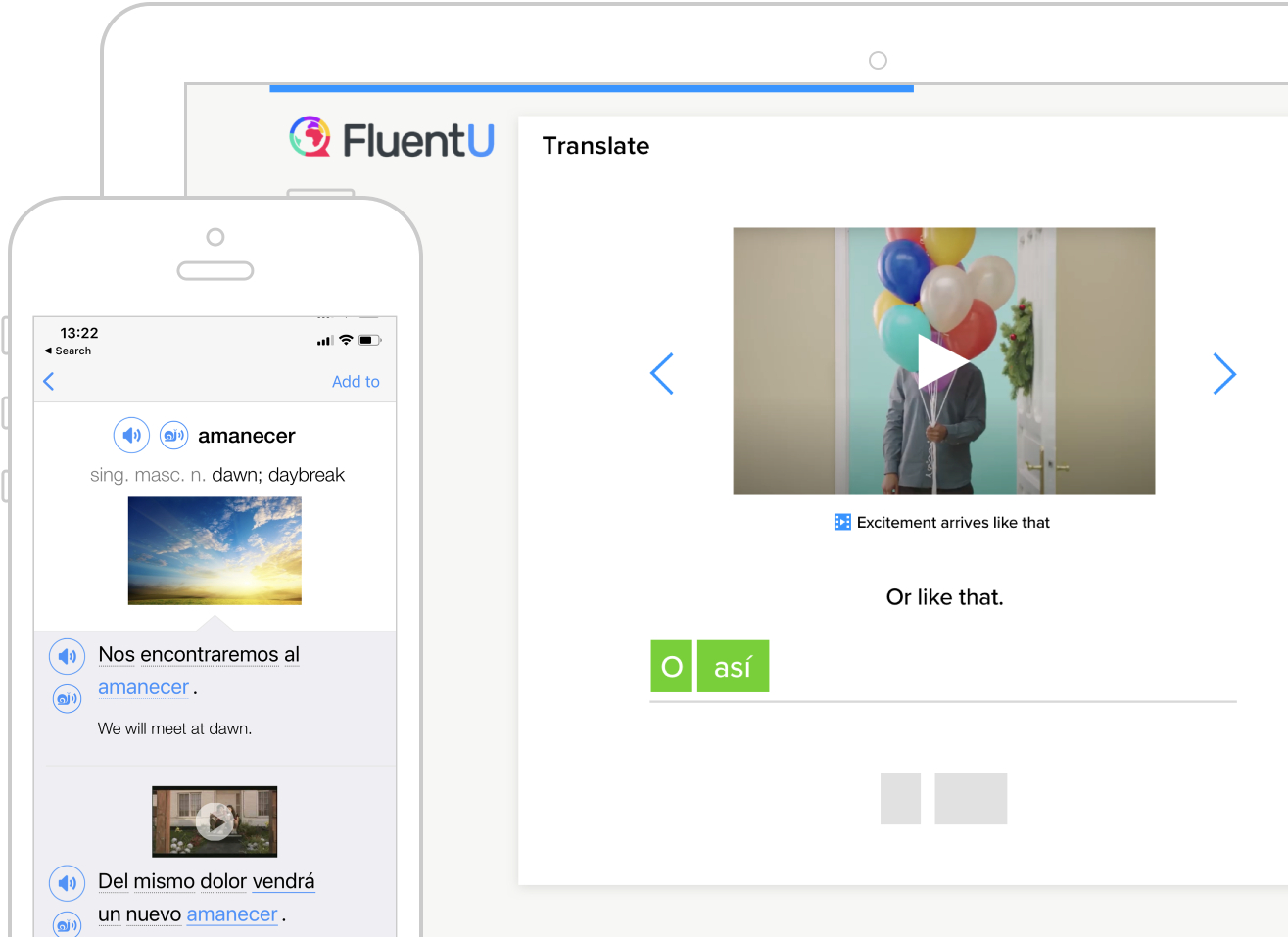
Out of the four skills, two that lend themselves to one another are speaking and listening.  Students in a classroom who need practice speaking and listening to the English language.  One article that I found useful in my Google Alerts this week came from Study International and had a list of Top 4 Apps to Help International Students Learn English Effectively,  one of the comments from an App developer, FluentU, was really interesting and stated that it, "uses a natural approach that helps you ease into the English language and culture over time."  I really liked the perspective and see the app as something that could be useful in our EL department.  Students can interact with videos, musical numbers, commercials, news and inspirational talks with subtitles and quizzes that adapt to the student's level of English.  

Getting Social in the Classroom listed a lot of great technology apps to use with students and inspired me to think of ways that I could get students to practice using the vocabulary in Geometry in an authentic way.  Using Flipgrid, I could have students post vocabulary pre-view videos and then interact with one another by responding after listening to one or two recordings of their peers.  Students could then practice using their English skills in the mathematics classroom, and use the technology to listen to others in the classroom.  Students would be able to listen to one another, critique their expertise and engage with one another in listening and speaking about content.

Reading and Writing 

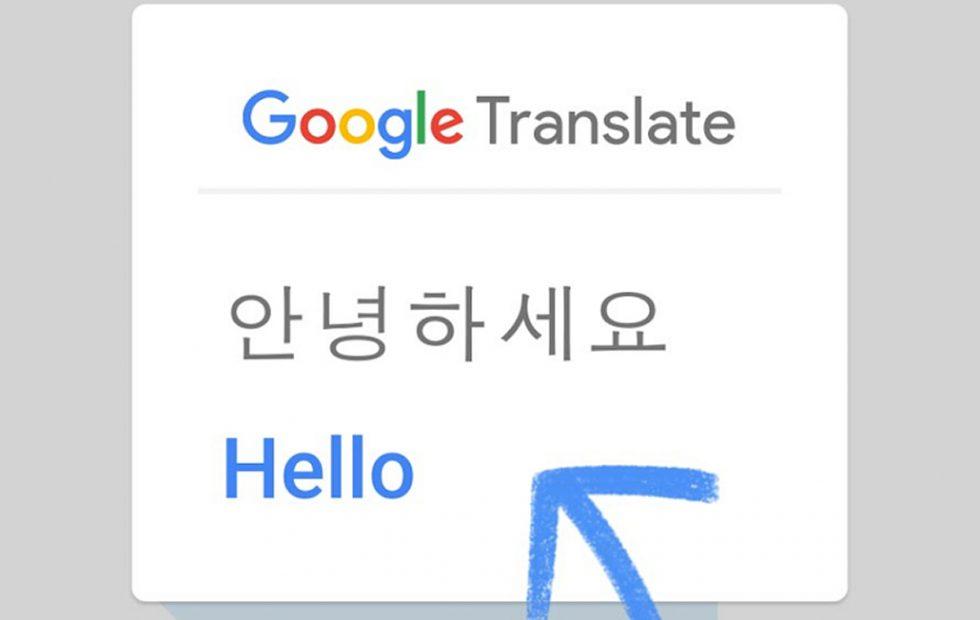
The Top 4 Apps for learning English Effectively also had an interesting use for Google Translate, using it Live to translate menus, signs or even museum exhibits.  This tool would have been useful for the group of students that I had the pleasure to chaperone in Annapolis, Maryland.  Students could have used Google Translate to quickly translate the wording on the plaques that were displayed in and around the capitol building.  The Google Translate tool can also be used within the mathematics classroom to help translate word problems in the mathematics classroom as well. 


Getting Social in the Classroom using social media to help engage students is described as an authentic way to get students to read and write in the classroom.  In my first blog, I talked about how I wanted to use Edublogs as a tool for student writing.  The one app in my reading that piqued my interest was the use of Twitter.  I have been using Twitter to connect with educators around the world, and the thought of linking student writing with the use of a specific hashtag.  Geometry students could connect to one another across my periods, and Tweet out real-world mathematics connections.  The beginning of the school year my classes could have a competition to find the best hashtag for the Geometry class, and I could then curate the Tweets for the classes to read online on my website.

With all of the online digital tools and applications on mobile devices, there are tons of ways to enhance and support the speaking, listening, reading and writing of my EL Students.  I am looking forward to using some of these tools in the future.  

Friday, April 26, 2019

Sensei Gibson

During my graduate course on Educational Technology Leadership, a reading was assigned and I was posted a question, "Do you see yourself in one of the professors? If so, which one?"

After reading “A Modern Leadership Fable” from Don Hall, I did a lot of thinking about my own style of leadership, and where I have gone throughout my life to bring me to wanting to become an Educational Technology Leader. Throughout my life, I feel I have always naturally gravitated towards the leadership role of an organization. In high school, I ended up becoming the President of the Chestnut Ridge 4-H Club, President of the Laurel Mountain 4-H Club, President of the Westmoreland County 4-H Board, President of NHS, President of Student Council, Vice President of the AFS Club, etc. I stepped away from leadership roles and did a lot less while as a college student, working a job to help pay for my gas, books and other expenses. Once I moved to York to become a teacher I tried to stay clear of leadership roles as well, only helping out with our local Jaycees’ Chapter as a member, and then something just switched back on. While we were voting on board members, I chaired the committee for membership. I joined our Data Committee at the alternative education school I taught at for a year. Once moving back to the High School, I agreed to help be a Technology Liaison, and troubleshoot minor issues within my building for our IT Department (That has since changed). Then I applied for the Distributed Leadership Committee within my high school, now I want to help drive even more change in my building and district.


As an educator my desk is far from perfect, I reference other great teachers in all of my writings and musings, I also feel like I know my stuff and can be counted as a sage sometimes as well. I feel as though the professor from the Fable I am most like, would have to be the Sensei, in all of my styles education, technology, and leadership. I may not always know the right answer but I can find it, I try to stay humble and appreciate what everyone can bring to the table, and in that aspect from Kurt Lewin’s styles of leadership I feel I would definitely be a Participative Leader, looking to make sure everyone has contributed and give a voice to all participants. I am naturally laid back, a procrastinator who accepts his faults and works hard when called for.  My own daughter told me that I work too hard sometimes, even when I sit down to just play and build LEGO sets with her for hours at a time.

My "cleaned-up" version of my Desk.
Much messier now that the end of the year is near. 

After starting this discussion, reflecting on my past, present experience and future aspirations, I feel like I bring a lot to the table as an educator, a leader, and as a human being. My wife has been trying to get me to see that I do some pretty amazing things, but I never feel as though they are truly great. I have a lot of self-doubt as to whether or not I am actually doing a good job. Then, I take a step back and see all of the hard work I do to make sure my students are appreciated, valued and gain insight to the world via my Geometry Curriculum, that I have painstakingly curated over the past 6 years. I was a force for bringing more technology courses back into the high school, and making sure students had access to the AP Computer Science Principles course. I am taking the initiative to pursue a second Master’s to ensure I am leadership material and build my schools’ future. I feel that I am exactly what I need to be, Sensei Gibson.

My New Badge!

Sunday, March 17, 2019

Leading Teachers through PD

As a part of our High School's Distributed Leadership (DL) Team, I have been given the opportunity to lead in new capacities for the past four years.  I have been trained for three years on the ways of developing teacher skills and school climate.  The team and I use the time allocated for our DL team to help bring Professional Learning Communities (PLCs) to life and advocate for using best practices while creating Professional Development (PD) for our staff.

One such day was last January when I lead our Department Meeting time and showcased using QR Codes for staff to get students working and engaged in their classrooms.  I modeled one use, by having staff get into groups of 4 and walk around our building scanning QR Codes about the process of using QR Codes in the classroom, while they went around with a group recording sheet.  (One person in each group at least had a QR Code Reader.

One teacher friend used QR Codes at the end of the
year, using the codes to tag a video for students
to listen and write in Spanish. 

It became a huge success and everyone involved said the time used was greatly appreciated and the activity very appropriate for their practices.  I revamped the whole project for a recent graduate course paper that I had to make a QR Code activity.  I used PowerPoint to give my posters some extra character and even attached all of the QR Code Sites I used in each slide. I then began thinking about what else I could teach them would be the best use of their time, but as we all know one does not professionally develop teachers.

QR Code Activity: 


During a second PD, I led, involved looking at Google Sites to create a classroom website.  During this planned instruction I gave 10 minutes in demonstrating how to make a Google Site in Google Drive, then showcased my ever-changing work in progress Geometry Website.  Teachers were then placed in their departments to play with the Google Site creator and discuss possible uses for a site, what they would want to display or share with students and the world, etc.  Attached is my Google Site PD form that was shared out to all staff to work on and share ideas.   I designed the Google Doc to be informative, editable, and shareable for the information decided upon by each department. 

One of my takeaways from DL Trainings. 

Through leading teachers with Professional Development, I have become more secure in my knowledge of education and knowing what is good for both students and teachers in my building.  I hope to continue on this trend, leading and teaching all new skills that are easily adaptable for any classroom.

Please use and adapt any of the activities I have made for your school too! 

Monday, October 8, 2018

CS Education

I started my Undergraduate work, at Saint Vincent College, in Computer Science and Business to teach high school students about computers.  After a round with C+ Programming, I decided that it was not for me, I did, however, enjoy my Calculus class immensely and decided to change to Mathematics Education as my Major.  Upon college graduation, I started teaching at an urban high school in 2007 and taught all Algebra 1 courses during my first three years, then Geometry, then Algebra again, Algebra 2, and now Geometry for the past 4 years.  While creating course material that I felt was relevant for my students I came upon some teaching material involving Scratch Coding.  From there I have found a love for computers and computer education again.
Saint Vincent College,
Latrobe, PA

I recently just finished coursework to complete my Plus 30 to advance the tier placement in my career, I had my Masters in 21st Century Teaching and Learning, through Wilkes University, completed in 2011, and did not realize the potential to having more credits under my belt.  I have been working hard to update my learning, and personal style to teaching, through courses in multiple ways, first through Learner's Edge where I completed a set of courses that gave me a certification (from their own personal certifications, not a PA State Cert.) in the area of Information Technology Specialist.  Through this set of courses, I decided it would be wise to get the state certification work on my Plus 30 and my eventual Plus 60 while adding more weight to my own personal learning with a second Masters in Informational Technology Specialist.

Bearcat in College
I am currently re-enrolled and going through Wilkes University where I have found the professors and learning modules very inspirational in my own teaching.  I have taken lesson plans and re-created them through use of more online and computer-based learning.   I have used Desmos, Geogebra and even Google Apps to enhance the learning in my classroom.  Through my journey, I have figured out that Computer Science is definitely going to take my own teaching and my students farther than I could have imagined.

Bearcat Teacher
I am starting this school year teaching AP Computer Science Principles and went through a training to learn how to process through the new course.  This will be a big step for me to take towards my goal of implementing more computer science in my school and will make for a huge learning opportunity for not only my students but myself.  In our building, we also created another new course using the text, Where Will I Ever Use This? Volume 1: Algebraic Modeling, using Excel to teach Algebraic Concepts.  The overall goal for our high school is to start creating learning academies within our building.  We have a Freshmen Academy, Performing Arts Academy and a Safety (First Responders) Academy, the academy I would like to start, you guessed it, Computer Science.


I would like to incorporate more courses in gaming, video game development, (since I am one of the Video Game Club advisors for my school) coding language, and possibly the AP Computer Science A one day.  I never thought that switching majors in 2004, would afford me the opportunity to still end up teaching and learning more about the passions I have in my life, computers and technology.

Personal Tech Blog


Friday, October 20, 2017

Conditional Statement Story - Post Observation Reflection

Ever read the story, "If You Give a Mouse A Cookie" by Laura Numeroff?  I had not until I married an elementary school teacher, and read the book she had in her classroom.  Several years ago after reading the book I had an idea that was going to allow me to use the story for my students as well.  What could a Geometry Teacher do with a children's book you may ask?  Well it's simple, the entire book is written as conditional statements, if p then q.  In my second unit in the school year,  Reasoning and Proofs, we delve into the mechanics of writing conditional statements, their converses, inverses, even contrapositives, and using the symbols to write these statements.  The statements are used throughout my course to write and prove postulates, properties, theorems and corollaries.  Students immerse themselves in the logic of the statements and decide whether or not there is a truth value to a given statement.


6th Period Starting the Project
When I originally designed my project I had students write their own book and draw illustrations in it.  But now as I am becoming more tech savvy and more digitally in-tuned with my students needs. I figured why not adapt the use of computers to make a PowerPoint of the book?  The end goal is to make Google Slides the tool we use. But until students can log-in to a true Google Account and collaborate with students on the use of Google Apps, I am stuck with what little true collaboration my students and I have now.   Students are going to have to write their own Conditional Statement Story Project, much like "If You Give a Mouse a Cookie."  The requirements are that the story has 10 conditional statements, 4 original statements, 2 converses, 2 inverses and 2 contrapositives that flow together much like the story I read to them Tuesday.   Students will then work in pairs to write their story and illustrate it with pictures from the web.  I have a Google Slide set up to show them the proper uses of a Google Image Search to utilize photos for their presentation that have permission to reuse and distribute the image.  I added this component of Digital Citizenship to promote the Creative Commons that many other students already know about.  

Since students could not access Google Slides from the network computers we were utilizing,  I then had to change gears in my planning and have all students create their stories using Microsoft PowerPoint.  They then uploaded their typed rough draft and final PowerPoint presentation to my Dropbox account.  My Wiki page linked here allowed them access to the links I provided for my Dropbox, where I could then add the presentations to my Google Drive and convert them to Google Slides to easily share online.  One key characteristic of being an educator is that I am very flexible and while I would like to continue my journey in learning and utilizing Google Apps, I know that there are tools out there already that help me with technically updating my craft.  


7th Period Starting the Project
Wednesday I was observed by my administrator while students were working on this project and so I am using this post as my reflection piece.  (Lesson Plan Here)  Some thoughts I had while thinking back on my activity are; I would like to change my requirements for the rough draft for next year by making students label their statements, and also have them put the labels in the notes section of their PowerPoint or Google Slide.  Although most students completed a nice cover page some needed to be asked to do so, so next year I am going to add a cover page section into the rubric.  I feel students worked really hard on their stories, had good questions about the project, and I chose some of the best ones to share below.


 Please read and enjoy the great things these students accomplished while writing, creating and learning online.