Showing posts with label Math. Show all posts

Saturday, June 15, 2019

Blog #2 ESL 509 - EL Students and the Four Skills

During our fifth week of class, we were assigned to read Robert Blake's journal on using, "Technology and the Four Skills."  The reading had us investigate technology to help teachers effectively and deliberately teach EL students reading, writing, speaking and listening skills.  Each of the four skills is necessary for a class with EL students.  Teaching students a vocabulary heavy course like Geometry I have found that I do need to find ways to make students interact with the vocab in different ways.

Speaking and Listening

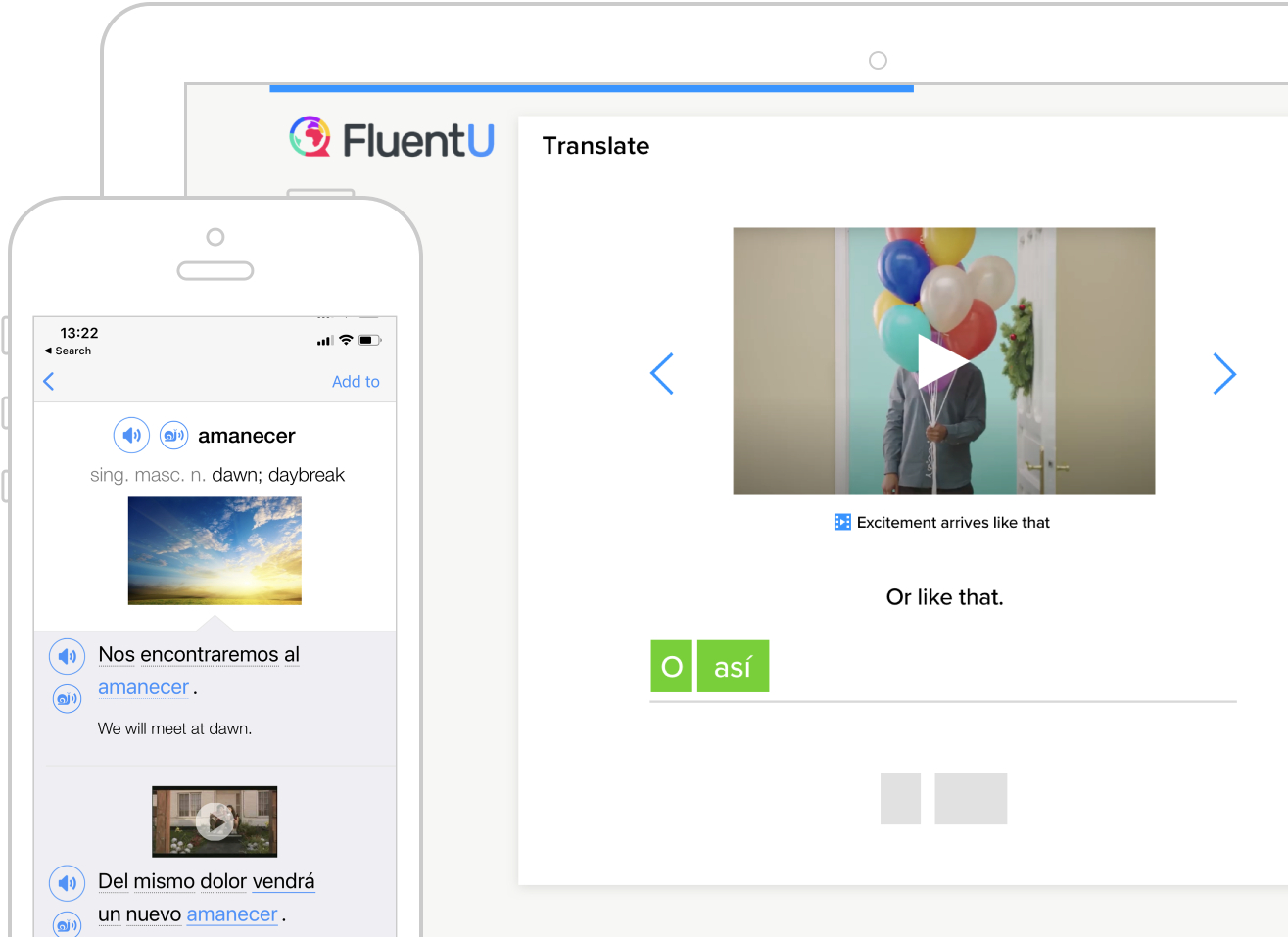
Out of the four skills, two that lend themselves to one another are speaking and listening.  Students in a classroom who need practice speaking and listening to the English language.  One article that I found useful in my Google Alerts this week came from Study International and had a list of Top 4 Apps to Help International Students Learn English Effectively,  one of the comments from an App developer, FluentU, was really interesting and stated that it, "uses a natural approach that helps you ease into the English language and culture over time."  I really liked the perspective and see the app as something that could be useful in our EL department.  Students can interact with videos, musical numbers, commercials, news and inspirational talks with subtitles and quizzes that adapt to the student's level of English.  
Getting Social in the Classroom listed a lot of great technology apps to use with students and inspired me to think of ways that I could get students to practice using the vocabulary in Geometry in an authentic way.  Using Flipgrid, I could have students post vocabulary pre-view videos and then interact with one another by responding after listening to one or two recordings of their peers.  Students could then practice using their English skills in the mathematics classroom, and use the technology to listen to others in the classroom.  Students would be able to listen to one another, critique their expertise and engage with one another in listening and speaking about content.

Reading and Writing 

The Top 4 Apps for learning English Effectively also had an interesting use for Google Translate, using it Live to translate menus, signs or even museum exhibits.  This tool would have been useful for the group of students that I had the pleasure to chaperone in Annapolis, Maryland.  Students could have used Google Translate to quickly translate the wording on the plaques that were displayed in and around the capitol building.  The Google Translate tool can also be used within the mathematics classroom to help translate word problems in the mathematics classroom as well. 


Getting Social in the Classroom using social media to help engage students is described as an authentic way to get students to read and write in the classroom.  In my first blog, I talked about how I wanted to use Edublogs as a tool for student writing.  The one app in my reading that piqued my interest was the use of Twitter.  I have been using Twitter to connect with educators around the world, and the thought of linking student writing with the use of a specific hashtag.  Geometry students could connect to one another across my periods, and Tweet out real-world mathematics connections.  The beginning of the school year my classes could have a competition to find the best hashtag for the Geometry class, and I could then curate the Tweets for the classes to read online on my website.

With all of the online digital tools and applications on mobile devices, there are tons of ways to enhance and support the speaking, listening, reading and writing of my EL Students.  I am looking forward to using some of these tools in the future.  

Thursday, June 6, 2019

Blog #1 ESL 509 - Blogging with ESL Students

Over the Summer of 2019, I have the opportunity to increase my pedagogy skills by taking several courses.  One of the courses I am engaged in is utilizing technology in an EL classroom, called Computer Assisted Language Learning, ESL 509 at Wilkes University in Wilkes-Barre Pennsylvania.  The course has required our class to start a blog, which luckily I already had this one, and use Google Alerts to keep up to date on ESL Technology for the classroom.  Several tags I have added include ESL itself, ESL Blogs, ESL Tech, ESL Math and some other Gaming to Learn Alerts.  Although they are limited, I have begun to collect some great resources for my teacher toolbox through the Google Alerts.

Blogging in the EL Classroom: 

During my tenure at William Penn Senior High School, I have taught the full gamut of mathematics courses until I finally landed in my passion, Geometry.  I teach a heavily vocabulary centered mathematics course, that has a lot of terminologies to describe the pictures and diagrams my students see every day.  One such set is the "undefined terms" of points, lines, and planes.  Within my classroom, I have utilized journaling on a weekly basis to help students process, use, and analyze the terms in Geometry.  I have a journaling page that students write on, and usually, every Monday, Wednesday, and Friday and submit each week for a grade.   They are asked to describe a process, define terms in their own words, and solve algebraic problems with geometric shapes.  I have been toying with the idea for some time, and I think after some much-needed pushes with my research, I want to utilize Blogs in the coming year for students to accomplish much of these written responses.

After researching all of the resources, using EduBlogs will best help me take my writing assignments to a new level.  While looking for information I came across some Tips and Tricks on how to use blogs with EL students.  Suggestions included having students utilize Blogs to keep up with the written practice of the English Language, then to make sure students write comments after at least one other person's written responses.  Setting up a good framework of expectations with a grading rubric is a must in this endeavor, as students will need to make sure their responses are thoughtful and appropriate for a school setting.  Blogs can be utilized as a writing platform to connect all student learning as well as help EL acquisition of the English Language.

EL Math Course


While reading some more of my Google Alerts one popped up that was interesting to me,  "CSISD Trustees Approve New Math Course for ESL High School Students."   While we have been struggling with Algebra Keystones and meeting state proficiency benchmarks, there are very few supports for our EL students.  Having an EL Math Course could be a game changer for our district.  If we had our students in the right supports we would be able to help students grow even more than in previous years.  Some of our students could really benefit from having an EL supported Math class to help with skills and vocabulary that they could encounter in our state exam.

This past school year our Algebra courses were enriched by adding the Math 180 online course and curriculum.  Students are challenged daily to make numerical sense out of the problems that they see. Maybe just taking this course, adding an EL co-teacher or aid might be just enough to make an EL math course with number sense and language support.


Look out next week for my next writing involving more of my thoughts on teaching EL students with technology!


Monday, September 4, 2017

Student Rapport

William Penn Senior High School, College Street Entrance
After thinking about the start of my eleventh year of teaching, of all the places I could have ended up with my career I never imagined this small town country boy would ever be successful in an urban education setting.  While I feel I will never have the perfect test scores, the high achieving grades from my students or become teacher of the year, I hope my students would all agree with me that I am successful in educating them.  In education the term prior knowledge is a buzz word that is applied to pre-assessment.  With every student I teach I not only look for prior knowledge but utilized the background of my students in reaching their needs.  I like getting to know each of my students and helping them learn the content of Geometry as well as thinking and planning for their present and future.

Wearing Black to support minority students in the community!
 - A student led initiative. 


Through taking online courses and experimenting with different content, I have started to prepare them for the real world with advancing their background in technology by incorporating more mathematics learning involving computer programs.  Growing up in this technologically advanced world we have seen the emergence in fractals from their usefulness in computer generated images (CGI), from film to video games, it is every where around us.  Fractal Geometry is not a term heard in every single school curriculum, it is in every computer animated image, but I have incorporated it with Logarithms to help my students prepare for diverse fields of study and pre-calculus.  As well, it allows  the chance to be artistic and creative in a sometimes otherwise thought of mundane classroom.  Through GeoGebra I have been able to bring precision and problem-solving skills to life in my classroom.  Utilizing Google Docs I have built in collaboration and peer editing projects.  With online research I have been able to bring ratios into social justice.  It is my hope that students come out of my classroom with a little bit more of an understanding of how critical thinking with mathematics can apply to their lives.

Video Game Club 
Fractal Geometry - Students creating 3-D Sierpinski Triangles
and Menger Sponges before the holidays.
Using indirect measurement to calculate heights in Penn Park!
On top of teaching relevant topics, I always want my students to know I am a person just like them and will join in with their antics at times.  I strive to make them understand that I see them as human beings and care about not only their education but their well being, because honestly not everyone of them has that at home.  In our district students come hungry, are homeless, struggle daily and all in all do not open up to many.  I want my classroom to be a safe and inviting place.  Students know my passions and I proudly display my dorky habits of comic books, video games, and love of math, learning, and my family.  I coordinate with my co-worker and friend, Nick Naugle to run a Video Game Club where students can stay after school, organize tournaments or just play games, we have also gone to the local arcade to enhance their experience in gaming.  I participated in a student led protest to the treatment of minority students by others in the county.  During my 3rd period last year we created a Mannequin Challenge Video, which got twelve thousand hits on Facebook! (We went viral!)  And yes I know, this does not relate to education, but sometimes you just have to have fun because at the end of the day these young adults are still kids, and they deserve these little moments.

 
Viral Video on Facebook! Just having fun with the kids...
Students playing in Penn Park after their project is done.
Teenagers like the playground just as much as kids!

As I reflect through this post it is not my intention to brag about my accomplishments in my classroom, but to recount my past years in growing as an educator, to help others understand teaching is not always about the content.  Sometimes you need to bring life into the content and make the student's education a part of their human experience.  All too many times I hear stories about educators who try to bend the will of their students to the demands of the curriculum and their own strict procedures.  I am not like most teachers.  Through years of trial and error, I have found that if I want students to learn I need to meet them where they are, and teach them what they need to know in order to be successful in their post-secondary decisions, be it college, technical school, career or military.
Students working on GeoGebra and also using
Maps/Ratios to figure out social justice problems.

Although not every interaction is positive, I have always enjoyed getting to know each student, even those that are a bit of a handful.  I enjoy working with every student, creating meaning in our days together and observing their unique character qualities as they mature.  I teach about 125-150 students in a school year, and if I feel like I can reach at least one, I have had a successful year.


Tuesday, August 15, 2017

YCCOSP Stem Academy

While working with the YCCOSP Program (See my first Blog on my summer work) I have been given a lot of autonomy to create learning activities for my students.  This past Spring we had a chance to help design and implement a Saturday STEM Academy.  For four Saturdays, students were immersed in activities in Chemistry, Biology, Engineering and Mathematics.  Professors from York College of Pennsylvania created meaningful learning experiences for the YCCOSP students in the STEM field.  Since our school has discontinued all courses in computer science our students are never given the chance to experiment with coding or different computer programs.

While researching for a graduate course I found several articles on Edutopia about using Scratch coding from MIT to teach coding and mathematics.  Scratch is a basic system and teaches students coding using building blocks on the online coding program.  Several of the students had been through my Geometry class and had learned about the use and concept of Fractals.  Since our students have never been exposed to any type of coding programs I decided they needed to gradually be given steps to learn how to use the Scratch programming and scaffolded their learning activity with three different tiers of difficulty.


The first assignment took students through the basics of scratch code and taught them how to make the online icon do the simplest of moves to create a given polygon.  (Easy Scratch Coding Edutopia Blog)  The second assignment was then the intermediate level of coding which had students create a code to have the icon make a  random polygon and then name it based on the parameters given.  (Intermediate Scratch Edutopia Blog)  Finally students took the program to create the Sierpinski Triangle, a fractal program that made a recursive pattern within itself.  (Advanced Scratch Edutopia Blog).  From each of the blogs I found I created instructions and questions for the students to complete each level of difficulty in coding with the Scratch program.


Students were then tasked to share their code to their college Google+ account.  In the YCCOSP Math STEM Community that I created, students explained what they created and shared it with the world.  This allowed for another deeper conversation about the way one needs to convey themselves online and in social media.  I informed students that the sharing of their code and what their creations did, since it was put online they also had to understand that their words would be able to be seen by others in the social media.  This simple step created the sense that they as digital citizens must be precise in their wording and represent their own selves in a positive academic manner.


The Saturday morning was filled with a lot of fun and students were very involved in the program. Students who had never seen code in their academic career were exposed to a new programming method that can help teach students.  Students were very successful in coding their projects and even commented that they enjoyed learning and "playing around" with the website.  The program ran very well and in the future I hope I can create as meaningful of a set of projects as I have here.  You can get all of my documents used in my TpT store for free! Coding Projects for STEM Mathematics

Tuesday, August 1, 2017

YCCOSP 2017 Summer Reflection

The YCCOSP Program

For the past three years I have worked for York College of Pennsylvania as an adjunct professor and as a summer mathematics instructor for the York College Community Opportunity Scholarship Program.  The summer program is designed to help our students succeed in an accelerated curriculum and prepare them to enter college.  The program offers enrichment to students who apply to the program from William Penn Senior High School. The groups that are in the program are either entering their sophomore, junior or senior year of high school.  I work directly every morning and afternoon with the Rising Sophomores and Juniors teaching them more mathematics problem solving and critical thinking skills.  They also take a course on reading and writing to help develop those skills.  The Rising Seniors take an entry level writing college course and can earn course credit with successful completion of the class.

The program is designed to enrich and has no set curriculum so I have the freedom to design whatever I want for the students to create and learn.  Working at William Penn and knowing the curriculum we offer helps me in structuring the summer class for the students' success for the upcoming school year.  The program helps emphasize critical thinking skills and advancing SAT preparatory skills.  Students in the program are either going into Pre-Calculus their junior year or doubling up their sophomore year with Geometry and Algebra 2.  We worked this past summer on skills involving critical thinking, problem solving, polynomials, geometry basics, trigonometry and even some statistics.  The ten students were also broken into three teams that were tasked with a culminating project called "Design a Winner."


2017 Project: Designing a Winner


Each year the students showcase what they have learned and/or worked on, so this year I found a project online through Curriki using geometric skills to, "Design a Winner."  Students were tasked with building a multi-sports complex with set criteria.  The question  was designed as open ended and each team created a company name, then they had to start preliminary designs, proposals, 3-D models of the final design and showcase mathematical computations they used to help in their designs.  The beauty of the project was that it tied into what is going on in the community already. We begun by reading the YDR article "Rutter's cornfield could become sports complex."


Students also got a special treat because there is one of the largest sports complexes in the nation right down the road from York in Lancaster.  We bused the group down Route 30 to the Spooky Nook Sports Complex, where two experts lead us on a tour of the facility and gave us facts and figures to start the teams on their brainstorming creativity.  Students took to Instagram for a scavenger hunt on the tour and documented the trip with facts and pictures of the facility to use in their projects.  Students then took to using Sketchup to complete 3-D models of their projects.  (Educators can get the $600 program for free with proof of employment by a school district!)

Reflection

With the program running for 5 weeks and only Monday-Thursday time was limited on the project.  What made things run more smoothly was dividing up the aspects of the project between the student writing class time and mathematics class time.  Students wrote proposals, created Powerpoints and designed pamphlets for advertising in the writing class. They then created their model, used mathematical ratios and proportions to scale their models and created a poster to show off their designs and calculations in math class.  All components were then put on display during the showcase finale.  Students were also tasked with writing and orally practicing their proposal so they could discuss and answer questions about their project with the staff and parents who came to view their work.  

Students working on their project.


The last week I was really worried about how the project would turn out because I felt like we had rushed everything to be done on time.  We did not get to use trigonometry to talk about angles in the complexes the students were creating nor did we complete more calculations that would have intensified the math, but the students were excited to use the Sketchup program and learn about new designing software.  The thing that also did not help was that I did not have time to approach and have the campuses IT download or purchase a subscription to Sketchup for the students, I took my own personal laptops, I had 2, for the students to use and one student brought his own and downloaded the free version of Sketchup Maker.  The designs that came from the students were pretty amazing, although the time did not permit tons of detail they did come up with some interesting beginnings of designs.  

Athletic Era and their Project Design

The students were innovative and worked diligently in and out of the classroom, some utilized the Google Document Apps features to collaborate on one pamphlet or slide show at all times, which I did not even have to suggest.  By the end of the program my fears of the students being unprepared quickly subsided by looking at the posters and listening to the students discuss their designs to various YCP faculty members and their parents.  The students had a great sense of what the project was all about, they had stunning posters, great rate changes and an even better understanding behind design.  One group thought so much about the culture of York that they wanted to create a complex in the formation of a rose, since we are the White Rose City.  

AGibso and their Project Design

Although I did not feel like we got through everything that could have been done with the project, the time that I had with my students was invaluable in re-fueling the fire that makes me want to teach.  The inquisitive creative teams that I worked with were fun and impressed me with the work they completed.  The students did such a great job this summer that I feel a sense of pride in their accomplishments, plus I feel rejuvenated and ready to take on my regular geometry classes again! 
Clock Work and their Project Design

Friday, July 28, 2017

#ObserveMe

While working on my graduate courses and finding new professional development pieces for my coursework I stumbled upon this new movement, #ObserveMe.  I decided to go all out for the last few weeks of school and try out the new tool.  I found a generic observation form for mathematics, and then created a Google Form that was linked to a QR code outside of my room.  The Google Form contained a few questions a colleague could give me feedback on.

The objectives I wanted feedback on were:

1. Improving questioning skills to further student problem solving skills.
2. Have students persevere in making sense of problem solving.
3. Create meaningful activities for critical thinking and problem based learning.


With our district being inner city urban youth, we are constantly under scrutiny from all sides and from that we were tasked with creating a teacher to teacher observation tool within each building.  Through all of the meetings about what it would look like, and Distributed Leadership meetings that we were going this route, but we never got into the full use of the teacher observation and collaboration tool.  Since I found the tool I figured why not give it a try and open up my classroom to others.


Saturday, March 25, 2017

Journaling in Geometry

While sitting through a Professional Development two years ago, I found myself excited to learn and ready to get back into the classroom.  Our presenter was enthusiastic, knowledgeable and fun and I really started to get into the ideology of writing in a mathematics classroom and how I wanted to implement that as a new procedure in my classroom.  I had always had students do a Problem of the Day that they recorded the problem and solved it on a sheet that would be turned in at the end of the week as part of a small formative grade, but after listening to our speaker I decided I would try journaling instead.  Since I have taught in an urban setting for all of my career my colleagues and I asked how to get students to build their writing skills.  Following the different ideologies from Collin's Writing and how to Build Stamina for Writing we discussed the three following types of writing that are useful in developing understanding and writing in a mathematics classroom:

1.  Descriptive Writing: the first step is to just get students to write their thoughts on paper; ask for a specific idea or concept that students should already know.  A way to differentiate would be to give a list of 5 specific questions or topics and have students pick at least 3 to write about, and students who can or need to be pushed can write about all 5.

Ex. Describe the classifications of triangles.
a. Give a description of each classification of triangles by their side lengths.
b. Give a description of each classification of triangles by their angle measures.

2.  Procedural Writing: The second type is to expand and have students write about procedures, such as How to make a PB & J?  Students should summarize a process, explain how to do correctly solve a problem.  It is a good way to start having students process steps in mathematics and give more information.

Ex. Explain the process in drawing a right scalene triangle.

3. Conceptual Writing: The third is then to convey understanding  check for clarity, correct vocabulary usage, correct mathematical concept usage.

Ex. a. What are the differences  between the given triangles?  Explain how you found those differences.


b. Can a scalene triangle also be a right triangle?


Using these three types of writing in a sequential order, students become more comfortable after doing multiple descriptive writing responses, and you can expand on their writing by making more procedural writing prompts, or conceptual writing prompts later in the school year.  Finding prompts (Journal Prompt Search) is always easy as well, Googling Math Writing Prompts yields many results with various forms and formats.

While using this process I have found a systematic way to have students complete the journal each day before class.  Every Monday Wednesday and Friday students write on their Geometry Journal Page.  I also found these Stamina Building Phrases to be useful.  Since we write on certain days of the week, the other two days in order to help with understanding and fluency in mathematics I have also implemented Number Talks, which helps me build not only students writing but also their oral fluency in mathematics.   Students in my classroom are writing and discussing to build on their understanding, they are writing to learn mathematics, not learning to write.  With these formative tools I feel I have improved my classroom understanding.

Reading and grading all of these journals seems like a tedious, time consuming event, but if done right no teacher has to read all of the journal responses.  The instructor during our professional development explained that in order to validate writing, students need to have their writing read, so to make sure everyone has their responses and opinions read, students in my classroom trade journals with a partner and then do a partner response.  Usually the response is for students to read their partner's writing and give one piece of advice or to state whether or not they agree with their partners writing.  Having the partner response and original response be a combined grade on the page holds everyone accountable.  I usually assign 2 points for each individual response and then 1 point for each partner response on the page.  Then I only have to glance at each section on the page to grade the journal page, making grading easy.