As parents, we all want to be able to protect our children from the world and make sure they grow up with confidence, self-awareness, and great interpersonal skills. As a parent, I want to make sure my little girls grow up nurtured and loved, and although a little bit sheltered because realistically I want them to be safe from traumatic and damaging experiences. Some of the most used applications that I discussed with my high school students recently involve the ever-popular, Facebook, Snapchat, and TikTok, all of which involve the opportunity to connect and interact with peers and others.
Facebook:
What is it? Facebook has been around for the longest and acts as an online connection to people, places, and events. There are so many uses for Facebook including sharing posts, photos, websites, and videos. People can create events, tag each other in any of the different mediums shared.

When allowing a child to use social media such as Facebook it is often a good idea to maintain open communication about expectations you have with your student and how they interact with others online. Your student will want to maintain good privacy settings, talk them through setting them up, talk to them about monitoring who and what they are tagged in on Facebook. Future schools and employers look at social media accounts when accepting and hiring. Help them not share personal information that others could potentially use against them.
Snapchat:
What is it? Snapchat is a more creative approach to sharing photos and videos, where you can directly send one of these media and then your connected friend who views it only has a certain amount of time to see the pic or vid. There are filters and voice modifiers to make interacting fun and entertaining, and a way to create a story in one’s profile that shares a day's events, only for twenty-four hours.
Help your student by setting the expectation that they must adhere to family rules and etiquette online. Snapchat can be potentially damaging when pictures and videos are shared from one phone to another. Something that was meant to be private could be shared with others and the world. Parents should talk to their students about the importance of privacy and not adding people to their Snapchat friend list who they do not know.
TikTok:
What is it? Tiktok has been a newer invention and allows users to create mini-videos, about 15 seconds and string four videos together for a maximum of 60 seconds in a story. The videos can be spliced together with friends, have added Augmented Reality features and incorporate music from around the web. Tiktok allows it's users to add friends, curate their videos and liked videos to share with those they connected with.
Parents can help their students by making sure they understand friending random people can be dangerous and potentially expose them to unwanted videos. Students should have good privacy settings so not everyone can see their videos, and make sure they are using the app in an acceptable way that their parents agree on.
Using good common sense to help guide your own student in this world can help keep everyone safe. Young adults are looking for connections and finding them all around the world in the apps that they use. A simple way to keep your teenager safe online is to talk with them and set the tone for them to be able to come to you and speak about any issues.
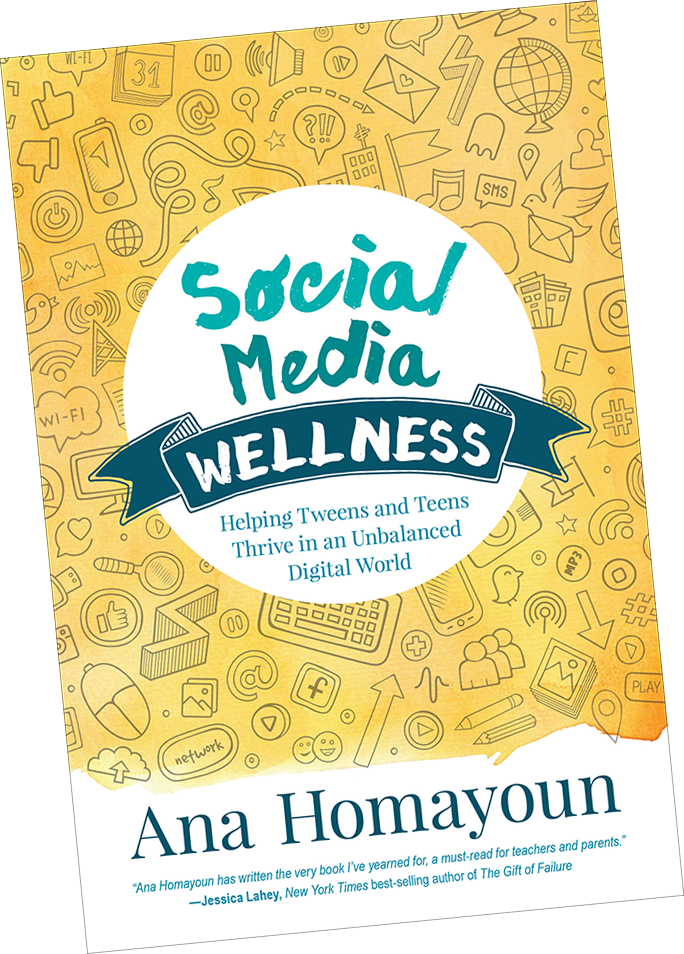
During an online course, I was tasked with reading Social Media Wellness, by Ana Homayoun. If you would like more information on how to connect with your teenager about social media, I highly recommend this book!
The nerdy way to cache Instructional Strategies for Geometry! - Brought to you by Gibson EdTech Advising
Showing posts with label Students. Show all posts
Friday, August 23, 2019
Monday, September 4, 2017
Student Rapport
![]() |
| William Penn Senior High School, College Street Entrance |
Through taking online courses and experimenting with different content, I have started to prepare them for the real world with advancing their background in technology by incorporating more mathematics learning involving computer programs. Growing up in this technologically advanced world we have seen the emergence in fractals from their usefulness in computer generated images (CGI), from film to video games, it is every where around us. Fractal Geometry is not a term heard in every single school curriculum, it is in every computer animated image, but I have incorporated it with Logarithms to help my students prepare for diverse fields of study and pre-calculus. As well, it allows the chance to be artistic and creative in a sometimes otherwise thought of mundane classroom. Through GeoGebra I have been able to bring precision and problem-solving skills to life in my classroom. Utilizing Google Docs I have built in collaboration and peer editing projects. With online research I have been able to bring ratios into social justice. It is my hope that students come out of my classroom with a little bit more of an understanding of how critical thinking with mathematics can apply to their lives.
![]() |
| Video Game Club |
![]() |
| Fractal Geometry - Students creating 3-D Sierpinski Triangles and Menger Sponges before the holidays. |
![]() |
| Using indirect measurement to calculate heights in Penn Park! |
![]() |
| Viral Video on Facebook! Just having fun with the kids... |
![]() |
| Students playing in Penn Park after their project is done. Teenagers like the playground just as much as kids! |
As I reflect through this post it is not my intention to brag about my accomplishments in my classroom, but to recount my past years in growing as an educator, to help others understand teaching is not always about the content. Sometimes you need to bring life into the content and make the student's education a part of their human experience. All too many times I hear stories about educators who try to bend the will of their students to the demands of the curriculum and their own strict procedures. I am not like most teachers. Through years of trial and error, I have found that if I want students to learn I need to meet them where they are, and teach them what they need to know in order to be successful in their post-secondary decisions, be it college, technical school, career or military.
Although not every interaction is positive, I have always enjoyed getting to know each student, even those that are a bit of a handful. I enjoy working with every student, creating meaning in our days together and observing their unique character qualities as they mature. I teach about 125-150 students in a school year, and if I feel like I can reach at least one, I have had a successful year.
Labels:
Bearcat Pride,
Critical Thinking,
Education,
Formative Assessment,
GeoGebra,
Geometry,
Math,
Problem Solving,
Rapport,
Real World Math,
Students,
Teaching,
Technology,
Understanding,
WPSHS
Location:
York, PA, USA
Subscribe to:
Posts (Atom)

:max_bytes(150000):strip_icc()/GettyImages-586113582-587422f63df78c17b65ea081.jpg)


