Thursday, February 6, 2020

Constant Change

As I started my 13th year, I was naive and hopeful.  Yet again I was starting with a mostly new group of students, and adding another course to my repertoire, AP Computer Science A.  I also finished up my second master's, a MsEd in Instructional Technology Specialist, which added to my PA State Certification.  I have always wanted to teach students about computers, it was originally my reason to go into teaching, now I am living that dream.

2nd Master's Degree

IT Specialist Certification

Having added the AP CSP course in the 2018-2019 school year, helped our school achieve the 10th Annual AP District Honor Roll, which also shocked our surrounding community.  (See the Article here: Surprising Results for York County AP Honor Roll)  But I did not want to just stop with computer science.  I grew up playing video games, and as an avid gamer, a lot of my graduate work incorporated gaming to learn, gamification and video games in the classroom.  Through this research and willingness to learn, I found help from some amazing places.

AP CSP Added last year to increase
our student AP experiences

My co-worker, Nicholas, and I decided it was time to do more, and we became Class Advisers for the incoming freshmen, the Bearcat Class of 2023.  We also are still co-advising the Video Game Club.  Over the summer we attended the CS For All PA Summitt, which helped us discover the great program, NASEF, which started the process to become a part of a sanctioned High School eSports League.   Though we have some hiccups in setting up our online games, there has been a lot of interest in the club and eSports team.  Check out the William Penn Cybercat's Facebook Page for more info on what the students are doing.

The new Cybercat Student Leaders.
My PIC, Nicholas Naugle and I
on Twin Day.

Some other projects I am excited about working on include partnerships in my community and abroad have brought on new opportunities. The biggest one involves helping build a former student's student-driven eSports and Video Game community, the BEAST Initiative Push.  Through this partnership, students will have more opportunities to build and be a voice in the eSports community in York. 

Cybercats playing on the Occulus!

I also have a good idea of what to do next with students who are not going to compete in the eSports competitions, and just want to game with friends at school.  Finding the organization VGC USA and it's founders right in South Central PA have opened up the possibility for more gaming learning, volunteer experiences, and career exploration for the Cybercats. 

Cybercats Gaming Together.

Finally, I would like to share where I have been finding more inspiration in gamification, and gaming to learn in everyday life from the Podcast, Professor Game.  I have ideas galore and studies to back-up my desire to game and play games in the classroom.  I am thinking to start by creating a new card game for my students to play when we learn about congruent triangles.

My Gaming Information Folder.

All of these great resources have just fallen into my lap and I wanted to make sure I shared them with others who are looking for similar information.  This blog started as a way for me to share mathematical experiences, but now is morphing into my entire educational experience including my push of educational boundaries to include video games.

Friday, August 23, 2019

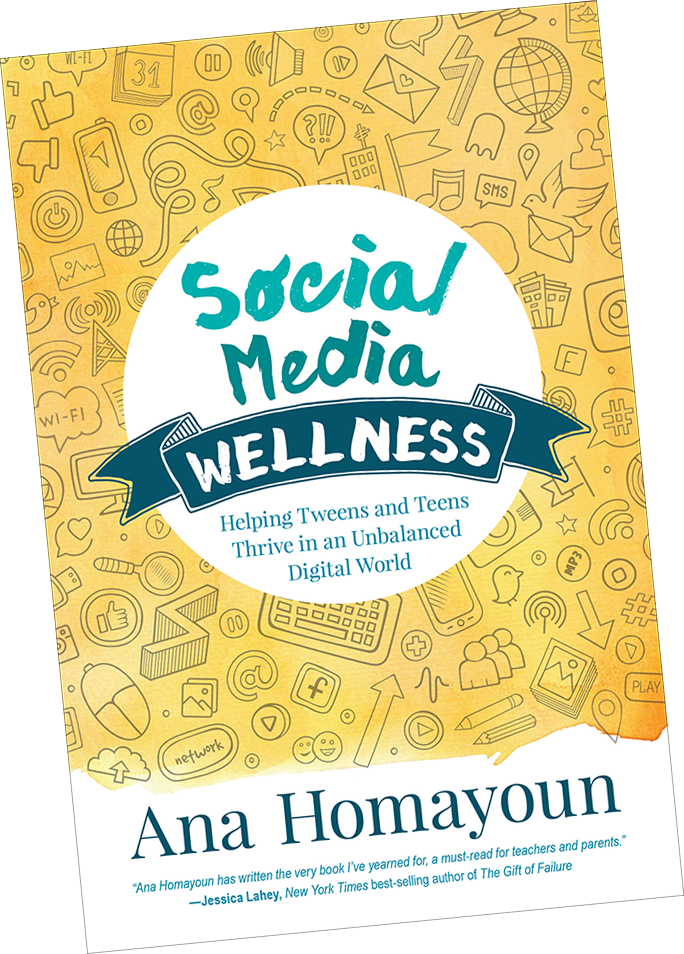
Social Media Wellness - A Resource for Parents

As parents, we all want to be able to protect our children from the world and make sure they grow up with confidence, self-awareness, and great interpersonal skills.  As a parent, I want to make sure my little girls grow up nurtured and loved, and although a little bit sheltered because realistically I want them to be safe from traumatic and damaging experiences.  Some of the most used applications that I discussed with my high school students recently involve the ever-popular, Facebook, Snapchat, and TikTok, all of which involve the opportunity to connect and interact with peers and others.

Facebook: 
What is it? Facebook has been around for the longest and acts as an online connection to people, places, and events.  There are so many uses for Facebook including sharing posts, photos, websites, and videos. People can create events, tag each other in any of the different mediums shared.

When allowing a child to use social media such as Facebook it is often a good idea to maintain open communication about expectations you have with your student and how they interact with others online. Your student will want to maintain good privacy settings, talk them through setting them up, talk to them about monitoring who and what they are tagged in on Facebook.  Future schools and employers look at social media accounts when accepting and hiring.  Help them not share personal information that others could potentially use against them.  

Snapchat:
What is it? Snapchat is a more creative approach to sharing photos and videos, where you can directly send one of these media and then your connected friend who views it only has a certain amount of time to see the pic or vid.  There are filters and voice modifiers to make interacting fun and entertaining, and a way to create a story in one’s profile that shares a day's events, only for twenty-four hours.

Help your student by setting the expectation that they must adhere to family rules and etiquette online. Snapchat can be potentially damaging when pictures and videos are shared from one phone to another. Something that was meant to be private could be shared with others and the world. Parents should talk to their students about the importance of privacy and not adding people to their Snapchat friend list who they do not know.

TikTok:
What is it? Tiktok has been a newer invention and allows users to create mini-videos, about 15 seconds and string four videos together for a maximum of 60 seconds in a story. The videos can be spliced together with friends, have added Augmented Reality features and incorporate music from around the web. Tiktok allows it's users to add friends, curate their videos and liked videos to share with those they connected with.

Parents can help their students by making sure they understand friending random people can be dangerous and potentially expose them to unwanted videos. Students should have good privacy settings so not everyone can see their videos, and make sure they are using the app in an acceptable way that their parents agree on.

Using good common sense to help guide your own student in this world can help keep everyone safe. Young adults are looking for connections and finding them all around the world in the apps that they use. A simple way to keep your teenager safe online is to talk with them and set the tone for them to be able to come to you and speak about any issues.

During an online course, I was tasked with reading Social Media Wellness, by Ana Homayoun. If you would like more information on how to connect with your teenager about social media, I highly recommend this book!

Friday, August 2, 2019

ESL 509 - iTunes U Blog Reflection

Another great investigation for my ESL 509 course led me to find a great iTunes U ESL Course.  The Bellmore-Merrick Central High School District in Long Island, New York put together a great set of course materials to review ESL students and some best practices to work with English Learners.  The first video really sets the tone and challenges the staff to break the stereotypes of many culturally different students.  The course has great videos made by students and also example projects by students that can be used in the classroom. 

There are six videos, two images, eight weblinks, and six articles to read and engage anyone using this course.  I like the diverse uses of media and the use of writing prompts to help share the learning in this iTunes U Course.  There is a lot that can be learned from this course and I think it is great that it was put together by a teacher and her actual class.  This format can have a lot of potential for life-long learning from the students about how media can teach others, and how to use the different technologies themselves. 

Saturday, July 13, 2019

ESL Blog #6 - #CSForAllPA

For the 2019-2020 school year, I am planning on teaching the AP Computer Science Principles and AP Computer Science-A courses.  The courses are not only a recommendation from the Commonwealth of Pennsylvania, and the Department of Education, but also another step in the direction of equity for students in our diverse population.  With computer science coming into its second year at William Penn SHS, I am committed to making sure all students are represented from all backgrounds.  That being said, I also have to be very strategic in how I am making these curriculum's available to students in our district.


CS Programs for EL Students

At the University of Texas in El Paso, Tech-E classes, seminars, and summer programs have been created to increase migrant student exploration in computer science.  The article I found in my Google Alerts talked about the start of this program in 2015, where it was just a small summer week-long camp, and that it has grown to full-semester courses offered yearly to undergraduates at UTEP.  The program is very strategic in offering experiences to students who are in transient worker families and exposes them to computer science and engineering.  This program is something that I think could be modeled at the high school level, and be used to get students interested in CS at the elementary and middle school levels.

CS Tools that could be used to inspire the next generation.
Raspberry Pi, Micro Bits & Video Games!

A pair of professors at Northwestern are also trying to make computer science more inclusive.  Sara Hood and Ian Horswill are looking to expand computer science offered to EL students, women and African Americans.  They are working to make sure all student have a safe space to practice computer science and realize that failure is just a stepping stone when creating computer programming.  The two are also making sure that students in the CS111 introductory course are coding for a purpose, to make something personal and worthwhile.  Giving students personal connections to a course make it more meaningful, and something that I can do with my CS students and the projects they are going to be creating.

The Push for CS in PA

Some very alarming statistics came out of Pennsylvania in the 2017-2018 data for students.  Out of 4,010 students that took the AP CS exams, only 309 were from minorities including EL Students.  Many students do not take the opportunity to try CS and luckily Governor Tom Wolf has already spent $40 Million on computer science grants for students and apprenticeships.  All of these initiatives are starting to be pushed in PA for the 2019-2020 school year, and I feel so glad to be a part of the Computer Science For All drive.  I am more proud that I began the program at our school a year before the state push.  Now I need to challenge more of our EL students to try Computer Science.

PA CS Statistics from the #CSForAllPA Summit