Saturday, June 22, 2019

Blog #3 ESL 509 - Statistics for Success

Statistics Growth

In Falmouth, Massachusettes, the school district has seen an increase in students who identify as English learners in the past 10 years.  The number grew from 35 students to 105 students, and the district had to find a way to meet those students by adding a full EL program.  The program also included adding resources for student's parents as well, partnering with the Cape Cod Literacy Council.  This increase and partnership remind me of York City Schools, we have had a gigantic increase in EL students over the past 10 years as well.  In the 17-18 school year, we saw 22.6% of our students were identified as English as a Second Language Learners. 

YCSD should look to find a similar partnership with our local library.  Martin Library in downtown York offers a lot of great programs.  The local library could help their ever-changing population of city residence with strategic programs.  Maybe parents could have English Language support for contacting the district, working on reading the report card, and even finding tools to help with translating,  In the 2017 Census, 82% of the foreign-born residents were from Latin America, which may have different cultural expectations on education.  Making sure the parents understand the school's expectations and cultural differences in York would also make for a great workshop. 
Martin Library, York, PA

Around the U.S. 

Topeka Kansas has seen a growth in their EL population as well in the past 4 years they rose from 3% to 14% in their EL population.  They have added EL teaching positions and paraeducators into their programs.  One of their goals is to track EL success after graduation and report out on that success, as their only other means of tracking their student progress is through the Kansas English Language Proficiency Assessment (KELPA).   Building from multiple points of data can definitely help define the successes of a program.  In York City, we should create a tracking system for the post-secondary success of our EL students, including career and military choices.  Not everyone is going into college for post-secondary success and that should be taken into account when rating the students' success after high school.

Texas Schools that have a successful EL program encouraging post-secondary schools is another way to look to student success.  There were 9 post-secondary schools in a Texas that received a seal of excellence from a non-profit called Excelencia in Education.  Adopting this sort of award for high schools that are providing an impressive education for their EL learners might be a great way to increase student and parent buy-in to a program.   In York, the York County Hispanic Coalition might be a good program to start the High School seal of excellence for EL programs.  Some may think awards for doing what you should be doing are not necessary, but it does build legitimacy in what is being done to teach the students in different ways. 


Ideas for the Future

Other educational programs in multiple states have seen a rising population of EL students, and have adapted accordingly.   York City has seen this same increase, using a combination of traditional classroom data to post-secondary success can help look at a students' success.   Outside partners to support and award those programs can only help in building our students into life-long learners. 


Saturday, June 15, 2019

Blog #2 ESL 509 - EL Students and the Four Skills

During our fifth week of class, we were assigned to read Robert Blake's journal on using, "Technology and the Four Skills."  The reading had us investigate technology to help teachers effectively and deliberately teach EL students reading, writing, speaking and listening skills.  Each of the four skills is necessary for a class with EL students.  Teaching students a vocabulary heavy course like Geometry I have found that I do need to find ways to make students interact with the vocab in different ways.

Speaking and Listening

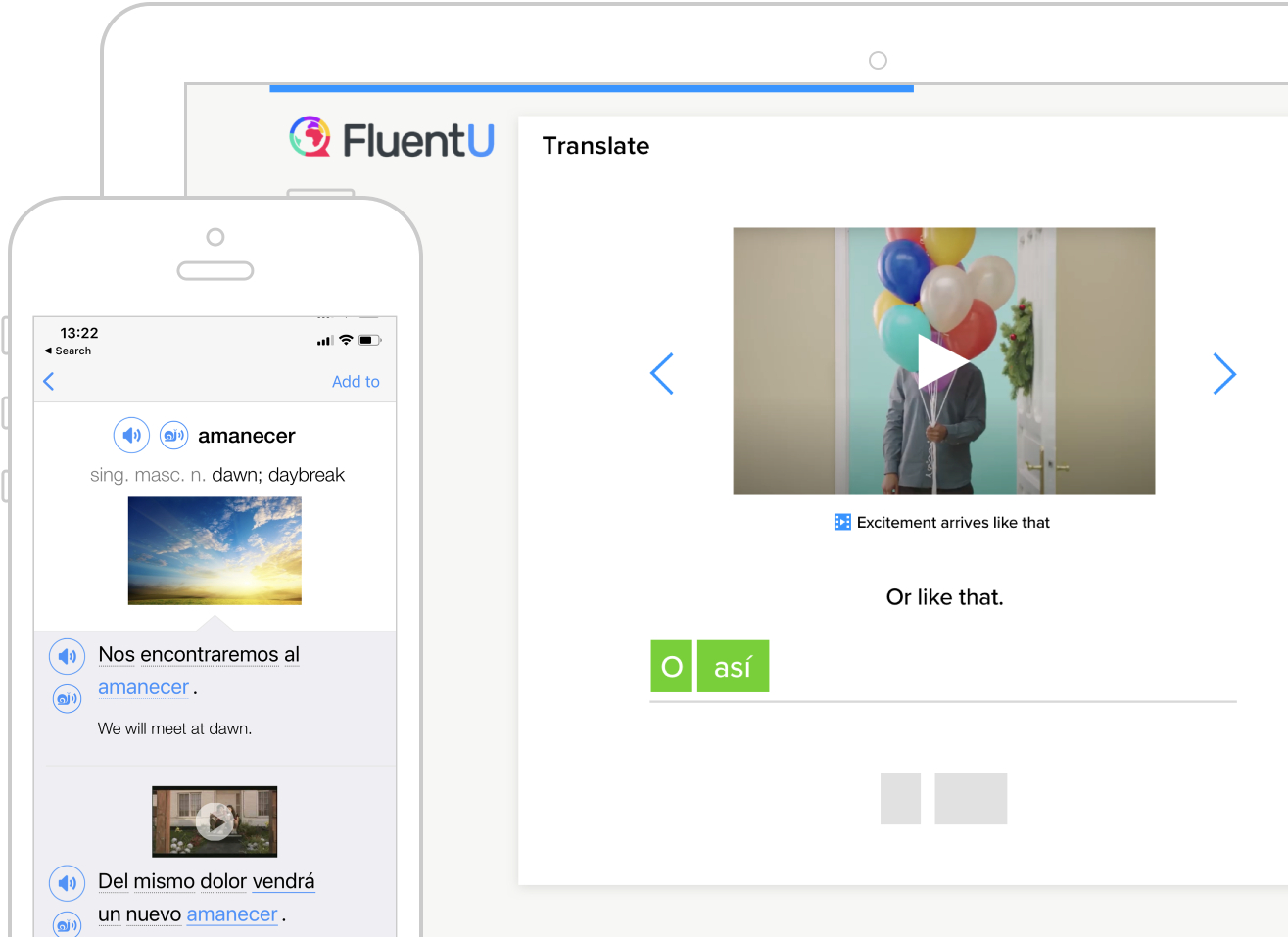
Out of the four skills, two that lend themselves to one another are speaking and listening.  Students in a classroom who need practice speaking and listening to the English language.  One article that I found useful in my Google Alerts this week came from Study International and had a list of Top 4 Apps to Help International Students Learn English Effectively,  one of the comments from an App developer, FluentU, was really interesting and stated that it, "uses a natural approach that helps you ease into the English language and culture over time."  I really liked the perspective and see the app as something that could be useful in our EL department.  Students can interact with videos, musical numbers, commercials, news and inspirational talks with subtitles and quizzes that adapt to the student's level of English.  

Getting Social in the Classroom listed a lot of great technology apps to use with students and inspired me to think of ways that I could get students to practice using the vocabulary in Geometry in an authentic way.  Using Flipgrid, I could have students post vocabulary pre-view videos and then interact with one another by responding after listening to one or two recordings of their peers.  Students could then practice using their English skills in the mathematics classroom, and use the technology to listen to others in the classroom.  Students would be able to listen to one another, critique their expertise and engage with one another in listening and speaking about content.

Reading and Writing 

The Top 4 Apps for learning English Effectively also had an interesting use for Google Translate, using it Live to translate menus, signs or even museum exhibits.  This tool would have been useful for the group of students that I had the pleasure to chaperone in Annapolis, Maryland.  Students could have used Google Translate to quickly translate the wording on the plaques that were displayed in and around the capitol building.  The Google Translate tool can also be used within the mathematics classroom to help translate word problems in the mathematics classroom as well. 


Getting Social in the Classroom using social media to help engage students is described as an authentic way to get students to read and write in the classroom.  In my first blog, I talked about how I wanted to use Edublogs as a tool for student writing.  The one app in my reading that piqued my interest was the use of Twitter.  I have been using Twitter to connect with educators around the world, and the thought of linking student writing with the use of a specific hashtag.  Geometry students could connect to one another across my periods, and Tweet out real-world mathematics connections.  The beginning of the school year my classes could have a competition to find the best hashtag for the Geometry class, and I could then curate the Tweets for the classes to read online on my website.

With all of the online digital tools and applications on mobile devices, there are tons of ways to enhance and support the speaking, listening, reading and writing of my EL Students.  I am looking forward to using some of these tools in the future.  

Thursday, June 6, 2019

Blog #1 ESL 509 - Blogging with ESL Students

Over the Summer of 2019, I have the opportunity to increase my pedagogy skills by taking several courses.  One of the courses I am engaged in is utilizing technology in an EL classroom, called Computer Assisted Language Learning, ESL 509 at Wilkes University in Wilkes-Barre Pennsylvania.  The course has required our class to start a blog, which luckily I already had this one, and use Google Alerts to keep up to date on ESL Technology for the classroom.  Several tags I have added include ESL itself, ESL Blogs, ESL Tech, ESL Math and some other Gaming to Learn Alerts.  Although they are limited, I have begun to collect some great resources for my teacher toolbox through the Google Alerts.

Blogging in the EL Classroom: 

During my tenure at William Penn Senior High School, I have taught the full gamut of mathematics courses until I finally landed in my passion, Geometry.  I teach a heavily vocabulary centered mathematics course, that has a lot of terminologies to describe the pictures and diagrams my students see every day.  One such set is the "undefined terms" of points, lines, and planes.  Within my classroom, I have utilized journaling on a weekly basis to help students process, use, and analyze the terms in Geometry.  I have a journaling page that students write on, and usually, every Monday, Wednesday, and Friday and submit each week for a grade.   They are asked to describe a process, define terms in their own words, and solve algebraic problems with geometric shapes.  I have been toying with the idea for some time, and I think after some much-needed pushes with my research, I want to utilize Blogs in the coming year for students to accomplish much of these written responses.

After researching all of the resources, using EduBlogs will best help me take my writing assignments to a new level.  While looking for information I came across some Tips and Tricks on how to use blogs with EL students.  Suggestions included having students utilize Blogs to keep up with the written practice of the English Language, then to make sure students write comments after at least one other person's written responses.  Setting up a good framework of expectations with a grading rubric is a must in this endeavor, as students will need to make sure their responses are thoughtful and appropriate for a school setting.  Blogs can be utilized as a writing platform to connect all student learning as well as help EL acquisition of the English Language.

EL Math Course


While reading some more of my Google Alerts one popped up that was interesting to me,  "CSISD Trustees Approve New Math Course for ESL High School Students."   While we have been struggling with Algebra Keystones and meeting state proficiency benchmarks, there are very few supports for our EL students.  Having an EL Math Course could be a game changer for our district.  If we had our students in the right supports we would be able to help students grow even more than in previous years.  Some of our students could really benefit from having an EL supported Math class to help with skills and vocabulary that they could encounter in our state exam.

This past school year our Algebra courses were enriched by adding the Math 180 online course and curriculum.  Students are challenged daily to make numerical sense out of the problems that they see. Maybe just taking this course, adding an EL co-teacher or aid might be just enough to make an EL math course with number sense and language support.


Look out next week for my next writing involving more of my thoughts on teaching EL students with technology!


Friday, April 26, 2019

Sensei Gibson

During my graduate course on Educational Technology Leadership, a reading was assigned and I was posted a question, "Do you see yourself in one of the professors? If so, which one?"

After reading “A Modern Leadership Fable” from Don Hall, I did a lot of thinking about my own style of leadership, and where I have gone throughout my life to bring me to wanting to become an Educational Technology Leader. Throughout my life, I feel I have always naturally gravitated towards the leadership role of an organization. In high school, I ended up becoming the President of the Chestnut Ridge 4-H Club, President of the Laurel Mountain 4-H Club, President of the Westmoreland County 4-H Board, President of NHS, President of Student Council, Vice President of the AFS Club, etc. I stepped away from leadership roles and did a lot less while as a college student, working a job to help pay for my gas, books and other expenses. Once I moved to York to become a teacher I tried to stay clear of leadership roles as well, only helping out with our local Jaycees’ Chapter as a member, and then something just switched back on. While we were voting on board members, I chaired the committee for membership. I joined our Data Committee at the alternative education school I taught at for a year. Once moving back to the High School, I agreed to help be a Technology Liaison, and troubleshoot minor issues within my building for our IT Department (That has since changed). Then I applied for the Distributed Leadership Committee within my high school, now I want to help drive even more change in my building and district.


As an educator my desk is far from perfect, I reference other great teachers in all of my writings and musings, I also feel like I know my stuff and can be counted as a sage sometimes as well. I feel as though the professor from the Fable I am most like, would have to be the Sensei, in all of my styles education, technology, and leadership. I may not always know the right answer but I can find it, I try to stay humble and appreciate what everyone can bring to the table, and in that aspect from Kurt Lewin’s styles of leadership I feel I would definitely be a Participative Leader, looking to make sure everyone has contributed and give a voice to all participants. I am naturally laid back, a procrastinator who accepts his faults and works hard when called for.  My own daughter told me that I work too hard sometimes, even when I sit down to just play and build LEGO sets with her for hours at a time.

My "cleaned-up" version of my Desk.
Much messier now that the end of the year is near. 

After starting this discussion, reflecting on my past, present experience and future aspirations, I feel like I bring a lot to the table as an educator, a leader, and as a human being. My wife has been trying to get me to see that I do some pretty amazing things, but I never feel as though they are truly great. I have a lot of self-doubt as to whether or not I am actually doing a good job. Then, I take a step back and see all of the hard work I do to make sure my students are appreciated, valued and gain insight to the world via my Geometry Curriculum, that I have painstakingly curated over the past 6 years. I was a force for bringing more technology courses back into the high school, and making sure students had access to the AP Computer Science Principles course. I am taking the initiative to pursue a second Master’s to ensure I am leadership material and build my schools’ future. I feel that I am exactly what I need to be, Sensei Gibson.

My New Badge!